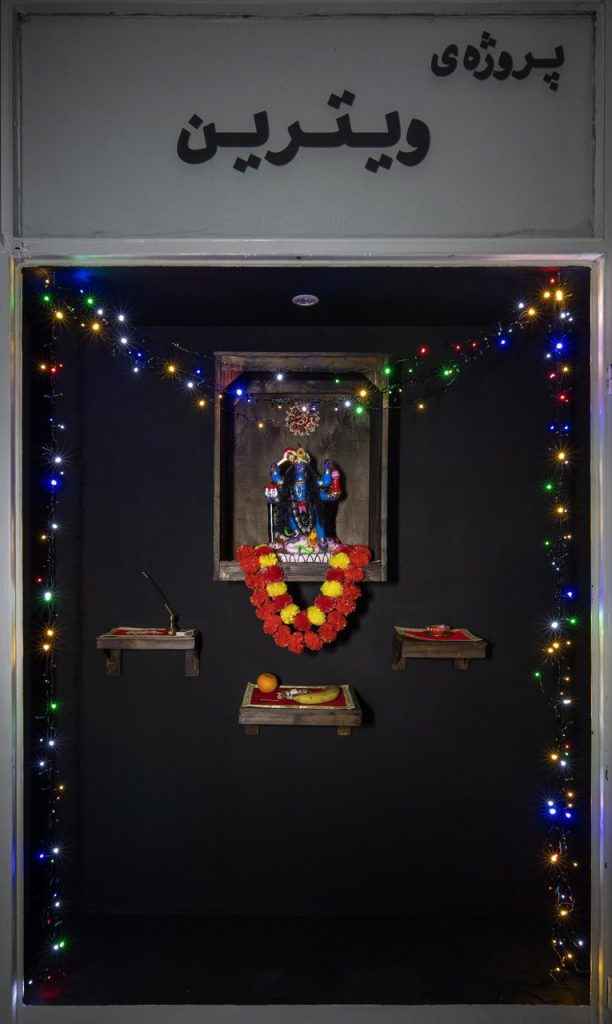
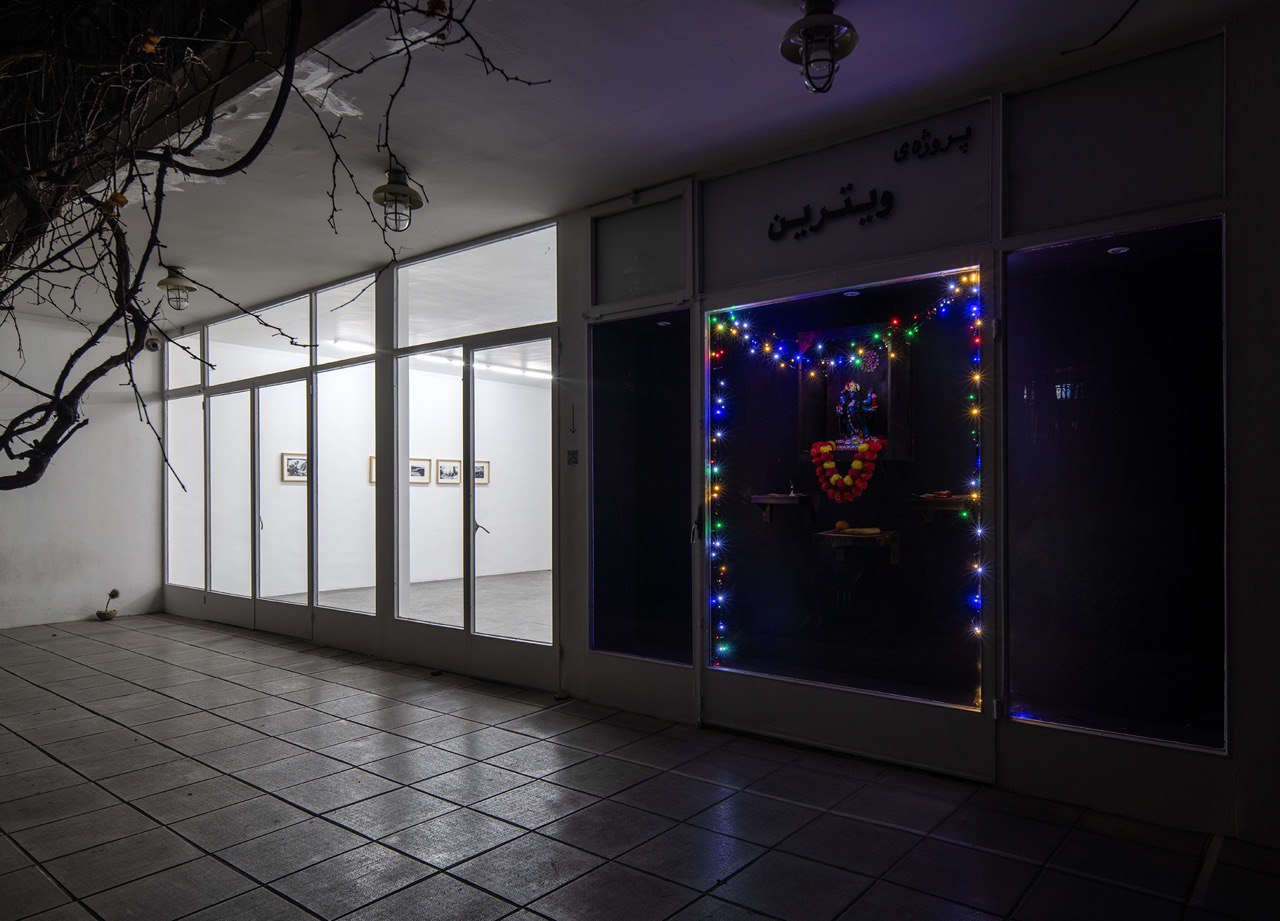
The project draws inspiration from Indian culture and Hinduism, focusing on the Geohistorical dynamic interplay between religion and cosmology, and how they shape and influence each other. Coming from Iran, where life is shaped by the intersection of monotheistic Islamic religion and totalitarian politics, the concept of multiplicity versus unity became a central theme of the project. In this context, multiplicity is symbolized by the polytheistic nature of Hinduism, contrasting with the unity and single-perspective worldview reflected in monotheism, which emphasizes the sovereignty of a singular, omnipresent deity.
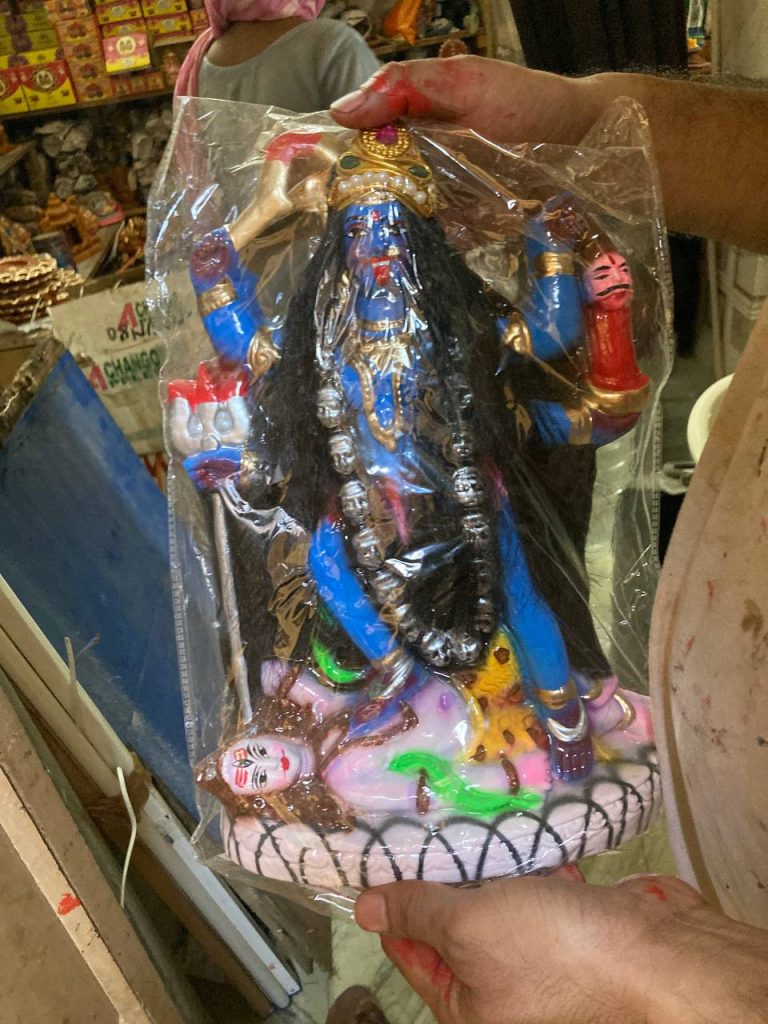
Following a month-long residency in India, in return, I decided to offer a temporary residency to one of the many Hindu deities in Tehran, advocating for multiplicity and alternative perspectives in contrast to the singular, monolithic narrative of the monotheistic Abrahamic God and totalitarianism, where no idols – representing agency and autonomy – should be erected. Among the numerous figures in Hinduism, I decided to bring Kali’s idol, the fierce mother embodying destruction and death, from India back to Tehran. This choice was deeply symbolic, rooted in the meaning of her name. In Sanskrit, Kali signifies both “Dark” and “Time,” embodying qualities starkly opposed to those of the supreme Abrahamic god of Iran, who dominates the geohistorical narratives of religion and politics in the country.
Firstly, Kali is a woman, whereas the Iranian supreme deity is male, illustrating different perspectives about the cosmos. Secondly, while Iran’s supreme deity has always been linked to light: الله نور السماوات و العرض—” God is the light of the heavens and the earth.” – Illuminationism – she is associated with darkness – Black Illuminationism – alluding to the ungraspable aspects of the universe. Lastly, she is one among many, representing diversity, while the Iranian supreme deity embodies totalitarian and singular authority.
Despite their immense differences, both deities share a critical connection: Time. As Time itself, Kali governs its flow, just as the monotheistic Abrahamic God wields control over time and the nation’s trajectory. The temporary temple dedicated to Kali serves as a provocative symbol, staging a clash between two ultimate powers vying for control over time and the future.